

Ever stared blog ai your laptop, hands above the keys, unsure how to turn nothing into a finished post? Same here. Writing blogs feels great – yet it drains energy, eats up hours, takes focus. Here’s the bright side: no need to grind solo now. Right now, smart tech helpers are changing the game completely. This piece walks through seven powerful best writing ai aids made to spark thoughts, shape catchy titles, build rough copies, boost search rankings, polish mistakes fast, speed up publishing – all so you talk with fans more, wrestle words less.
What to Look for in a Blog AI Tool
First off, here’s what actually matters when judging an AI tool for blogging – this is how I chose the seven you’ll see next. Not every feature counts, so I focused only on what truly works in real use
Key Features That Matter
Simple to use
If a tool’s overly complex, you’ll end up studying it instead of actually working with it.
Works well with extended content
Blogging goes beyond catchy titles – check out apps that support entire articles, drafts, parts.
Built to Rank Well
Finding tools offering keyword ideas, layout tips, subheads or easier reading? They really help out.
Writing That Sounds Like People Talk
What matters is that the end result sounds like you – in your words, not some machine. Folks on Reddit keep saying it helps to toss in personal bits.
Tweak and Finish Helpers
Putting words down comes first; fixing them up happens after. Apps that tweak how clear or smooth your writing sounds make the end result easier to follow.
Keeping that in view, here’s a look at the top performers.
Below are seven high‑quality AI tools, each with its own strength for blogging. Try a few, see what fits your workflow.
1. Copy.ai
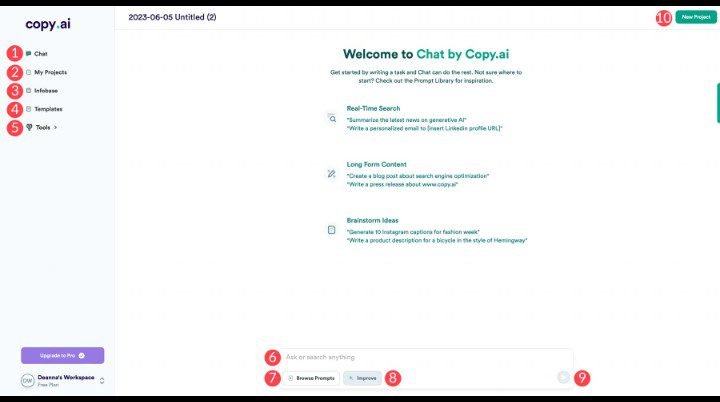
I’m a writer who also blogs. To see how well Copy.ai works outside theory, I put it to use every day for thirty days straight. Instead of guessing, I relied on it regularly – just to know if spending more time on it later makes sense.
A top feature I tested? The “Blog Post Wizard.” It spits out entire articles – close to 2,500 words – in hardly any time. Used it loads; sure, they say “5 minutes,” but mine usually took 2 or 3.
Besides using this blog ai tool often, my blog’s visits jumped – from roughly 3k each month up past 10k. Though it started slow, results picked up after a few weeks – showing steady clicks. While I didn’t change much else, the shift felt clear – noticed more shares too. Since sticking with it, numbers keep rising – no plateau yet.
How does the blog ai Post Wizard work?
Step 1: Setup the wizard
You type in your blog’s name, pick words you’re aiming for, also how it should sound – like chill or upbeat. Hit the “Make Structure” button after that.
Step 2: Refine your outline
Copy.ai hands you a rough plan. Tweak it however – toss stuff out or throw more in – before hitting the following stage.
Step 3: Generate talking points
You get key ideas for each part of the plan. Go over them – adjust if you want.
Step 4: Review the content
Check everything, then publish the complete article. After that, finish up.
Pricing
Copy.ai offers a free blog ai plan and paid plans. The free plan doesn’t include the Blog Post Wizard.
Paid plan details:
Up to 40,000 words/month costs about $49/month.
Larger usage (100,000 words/month) costs around $99/month.
If you write a lot, you’ll likely use up the 40,000-word limit with ease.
What I liked
The Blog Post Wizard works quick – plus it clears mental blocks when you’re stuck.
The layout’s easy to use – perfect for folks making content, since it flows naturally without confusion.
That made my work faster while keeping a steady routine on track.
Nothing might beat that
The basic version doesn’t offer much – worse, it leaves out top tools like the assistant feature.
For paying customers too, tweaking the result is probably necessary – smooth out how it sounds, verify details, rework the flow.
It doesn’t work as well for super technical stuff that needs deep research – especially when real understanding, original thinking, or specialized knowledge is key.
If you write blogs or online stuff and want to type faster, get ideas quick, yet keep things steady – Copy.ai could help. While it’s not magic, this app works well when you’re stuck or running short on time; also great for shaking off blank-page stress. Though no software replaces real thinking entirely, having one that suggests angles while cutting repetitive tasks? That’s useful more than once.
Yet when it comes to sharp, imaginative, detailed work – like complex guides or fresh narratives – you’re better off with a person shaping it, or spending serious time tweaking the output.
Yeah, sure – it pays off if you get what it handles well but also see where it falls short.
2. Frase
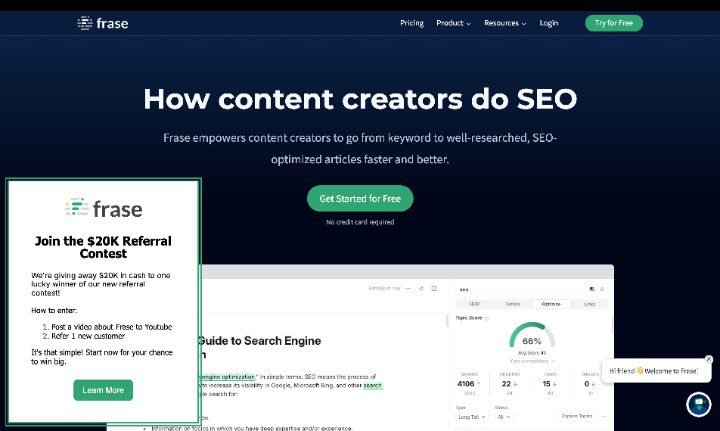
Frase is an AI-powered content and SEO tool designed to help writers, content teams and marketers research topics, craft outlines, generate content and optimise it for search engines and even open ai blog answers.
At its core, it combines topic research (what questions people are asking), content briefs (what structure will likely rank) and an blog ai writing assistant (to generate text) in one platform.
How Frase Works
Once you sign in, you pick a target topic or keyword. Frase then scans top-ranking pages on search engines and surfaces the headings, questions, and structure those pages use.
From there you can build an outline by selecting H2/H3 headings from the analysed pages. You can then feed those into the blogging with ai writer (“Write for me”) which will generate the body text under each section.
Then you use the optimisation tools: Frase will compare your drafted article to competing pages (keywords, word-counts, related topics) and suggest where you may be weak.
No strong technical SEO knowledge is required: the interface guides you through research, writing and optimisation.
Key Features
Here are some of the standout features of Frase:
Topic research & people also ask style insights.
Automatic outline creation based on high-ranking pages.
AI text generator for sections of the article.
Content optimisation dashboard, showing your coverage vs competitors.
Integration with SEO workflows: content briefs for teams, export/share, etc.
What I Liked About Frase
One major plus of Frase is how it saves time. Content teams often spend hours doing manual research, structuring outlines, picking sub-topics; Frase condenses much of that. For example one user says: “The brief builder and topic research features are incredibly helpful and easy to use. The SERP analysis saves a ton of time.”
Another strong point is the ability to produce structured content that is informed by what currently ranks. This gives you a head-start in matching search intent rather than guessing. For example, in one review: “The actual information included was really good … Being able to choose your sections based on search results is very helpful.”
The platform is evolving and the team appears responsive; many reviews note frequent updates and feature improvements.
What Could Be Better
Despite the strengths, Frase has some limitations. The blog ai-generated content frequently requires human editing to reach publication-ready quality. One reviewer noted: “I wouldn’t publish the content exactly as it was ‘written’ by the AI tool … I would add my own introduction and conclusion, fix a couple of grammatical mistakes.
Another concern is cost and value for smaller teams: some users feel the pricing is high relative to the effectiveness for their specific use-case.
Also, the user-interface and learning curve: one reviewer mentioned the amount of information and tools can feel overwhelming at first.
Finally, there are mixed user experiences of customer support: on one hand many positive reviews, but on review-platforms like Trustpilot there are users reporting frustration with responsiveness and refund-policies.
Who Is Frase Best For?
Frase is ideal if you are:
A content writer or small team producing regular blog posts and want to scale.
An agency or freelance writer needing to research and generate content more efficiently.
Looking to optimise existing content by analysing what your competitors are doing and improving structure.
If you are a solo blogger doing highly niche or creative work, and you rely heavily on human storytelling, you may find the tool less useful (or you’ll still need to invest time editing heavily).
Pricing & Value
The entry price for Frase starts around US$ 45 month for the basic plan (as of the time of one review) with further add-ons required for unlimited AI content or advanced SEO functions.
When you factor in the cost, you should ask: how many articles will I publish per month, how much time will this save me, and what’s the expected uplift in organic reach? If the time-savings and better performance pay off, the cost may be justified.
In summary, Frase offers a very useful platform for content creators who want to improve efficiency, structure and SEO-focus. The research and outline side of the tool are particularly strong. However, it is not a complete substitute for human writing and editing if you care about unique voice, deep craft or premium publication. You’ll still need to refine and polish the output.
If I were to give it a score, I’d say it’s about 4 out of 5: a strong tool with very good time-saving potential, but with caveats about editing requirements and cost.
Final Thoughts
If you are writing content regularly, and you want a systemised way to research what your audience is searching for, build solid outlines and generate draft content quickly, Frase is a good option. Make sure you budget for human editing and ensure you can extract value from the time saved. If you only publish rarely or rely on a very highly crafted voice or interactive storytelling, you might look at simpler or more affordable tools.
Ultimately, the most important question is: will this tool help you publish better content more often? If yes — then it’s worth a look.
3. Wordtune
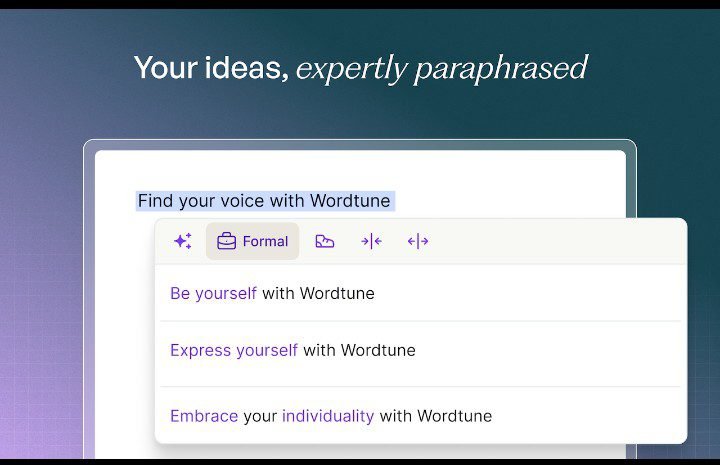
Wordtune’s a blog ai writing tool powered by artificial smarts, built by AI21 Labs. Since it helps rephrase lines, shift vibes – like chatty or serious – it clears up your message. Instead of drafting whole texts outta nothing, it polishes stuff you’ve already put down.
Key Features
2.1 Sentence Rewriting and Paraphrasing
Wordtune shines by showing different versions of any sentence you choose. Instead of sticking to one phrasing, it gives fresh takes – some tighter, others more detailed. While rewriting tools often feel rigid, this one adapts on the fly. Whether trimming fluff or adding depth, it keeps things flexible.
2.2 Tone Adjustment
You’ve got options – pick a tone, like serious, relaxed, or somewhere in the middle. Depending on your pick, Wordtune tweaks its ideas to match.
2.3 Integrations and Browser Extension
Writtentune comes as a Chrome add-on, while working smoothly with online forms, emails, or different typing tools – making it easy to tweak your text anywhere.
2.4 Summarizer and AI Prompts
On top of rephrasing, Wordtune lets you condense text or video material while offering smart suggestions that guide how you write.
3. What’s Good About Wordtune
Wordtune helps folks clean up their drafts – great for those tweaking what they’ve already written.
It’s simple to operate while delivering fast results. Many say it helps improve text in less time.
It adjusts tone while helping authors match their voice to any situation – pretty useful when moving from laid-back messages to serious reports.
You get to test things out at no cost right away because there’s a free option.
Works smoothly with your usual tools – like browsing or sending emails – so there’s no need to keep switching to another editing app.
4. Limitations and What to Watch
No tool works perfectly – Wordtune comes with certain compromises worth noting.
The basic version comes with tight restrictions – like how many times you can rephrase daily. For serious usage, upgrading is pretty much required.
It’s great for changing single sentences, yet struggles when handling whole paragraphs at once; tackling big blocks of text isn’t its strong suit.
Suggestions can miss the bigger picture now and then – this goes double when things get technical or super specific. That’s why having a person check stuff still matters more than ever.
If you want solid blog ai SEO tools – like tuning keywords or mimicking a brand’s tone – or expect it to write entire documents from scratch, Wordtune might fall short. While it helps polish text, don’t count on it handling everything out of the box.
5. Pricing Overview (2026)
Wordtune’s setup comes in levels. The basic option lets you try it out, while upgraded ones open extra features.
A basic option could give you roughly 10 rephrases each day. However, a “Pro” tier offers extra tools along with higher limits. Make sure to visit their site to confirm current costs where you live.
6. Who Should Use Wordtune?
Wordtune’s ideal for:
Folks who jot down words regularly but need help sharpening how clear, smooth, or natural they sound.
Writers or folks emailing stuff – tweaking articles, updates, or write-ups while needing faster touch-ups.
Individuals picking up English or using it on the job and needing a hand to sound clearer and less awkward when they write or speak.
Could work less well for:
Authors hoping for complete pieces written from scratch instead of rewording existing ones.
Groups that want real understanding of brand tone, big file edits, or serious search engine support.
A content writer like me sees Wordtune as handy when fine-tuning drafts. When you’re stuck shaping the tone or redoing sentences too often, this tool might lighten the load. Still, it won’t handle heavy revisions or spark original ideas by itself. Your personal touch, expertise, and reworking stay essential. Go for a suitable package – know what it does – and giving it a try makes sense.
4. Anyword
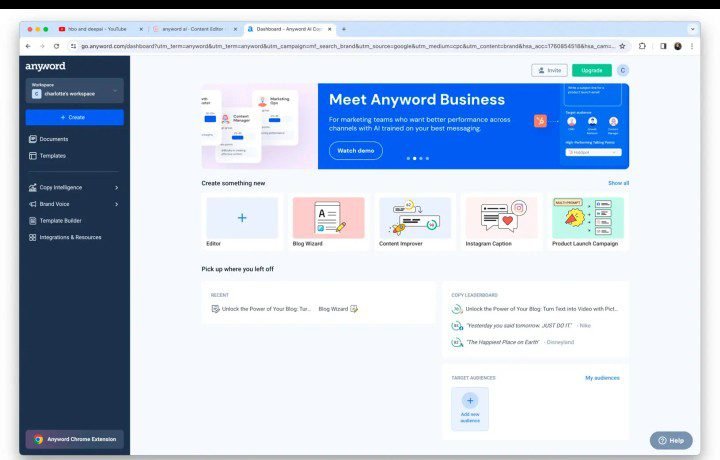
If you’re looking for a smart writing assistant to speed up your output, then Anyword is worth a look. It promises to generate blog posts, ad copy, emails and more — all while analysing which version is likely to perform best. But like all tools, it’s not flawless. Here’s how it fares — and what it means for content writers like you.
What Anyword does well
Anyword gets high marks for helping break through writer’s block and producing clean drafts quickly. Users report that it can generate multiple versions of text and present predictions about how each version will perform with target audiences. Its “Blog AI Wizard” feature helps you jump into blog posts. The interface is web-based and intuitive, making it easy to start.
Stand-out features
Predictive performance scoring: the tool predicts how well your text may resonate before publishing.
Brand voice and tone control: you can specify how Anyword should write to match your brand or style.
Multiple content formats: blog posts, ad copy, social posts and more.
What to watch out for
It’s not all smooth. Some users say the cost is high, especially for smaller operations. Also, because much of the text is AI-generated, parts of it can feel generic or lacking in human nuance. One review noted the output “still has a strong AI feel to it”. Lastly, while the free or trial options let you test it, their limits may restrict how much you can experiment.
Is it right for you as a content writer?
Since you write content professionally, here’s what to consider:
Pros for you
You can use it to generate draft blog ai posts or outlines which you then refine and personalise — saving time.
You’ll have a consistent brand voice option, useful if you write for multiple clients or channels.
The performance-scoring feature could help you refine copy before publishing, increasing your value.
Cons for you
The tool won’t replace your expertise. It will still need your creative input, editing, and personalisation to stand out.
If your value lies in distinctive human storytelling or deeply nuanced pieces, the AI base-text may need heavy work.
Budget-wise, you’ll need to check if the subscription fits your workload and rate of usage.
Final verdict
Anyword is a strong assistant tool for writers and marketers who want to scale content generation and test different versions of copy. It won’t replace a skilled writer, but it makes drafting faster and gives you extra insights. For your role as a content writer, it could be a valuable addition — particularly if you’re doing higher-volume blog ai have repetitive projects, or need to hit deadlines. If you care mostly about unique voice, deep storytelling or bespoke content, you’ll still be doing the heavy lifting.
Would you like me to pull in a live comparison with competing tools (including pricing) so you can see if Anyword is the best pick for your workflow?
5. Jasper
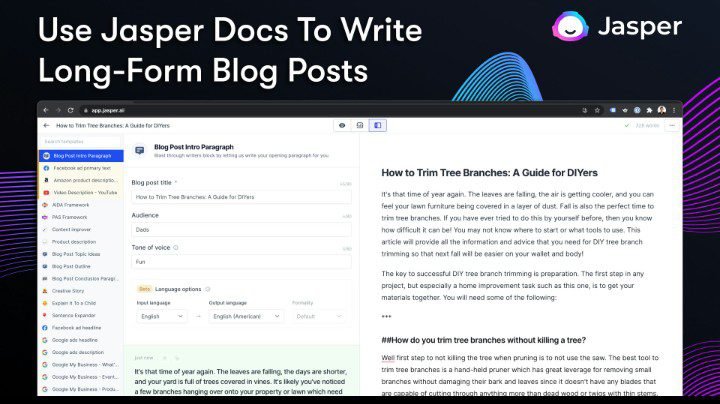
Jasper AI’s a smart writing helper that lets bloggers, teams, or brands draft solid content quicker. With sharp machine-based smarts, it spins out articles, catchy social lines, item blurbs – also ads. If you’re stuck mid-sentence or just chasing speed, this tool simplifies drafting stuff out loud. No fluff, no drag – it keeps things moving.
How Jasper Works
Jasper uses natural language processing along with machine learning to figure out what you want and write stuff that sounds like it came from a person. Just type in a quick idea or subject, then Jasper churns out whole sections, bullet points, or complete pieces built around your starting point. On top of that, you can tweak how it sounds – like changing the mood, wording flavor, or layout – to keep things lined up with how your brand usually talks.
Key Features That Stand Out
Jasper packs several features into one place – think a writing space, handy SEO helpers, plus ready-to-use layouts. With Boss Mode, just tell it what to do, say “draft an intro on AI apps,” so it acts like a real teammate typing beside you. It plays well with Grammarly and SurferSEO too, sharpening your words while giving visibility online a little boost.
Performance and Accuracy
Jasper churns out text that feels way more natural than you’d expect. Thanks to clear, thorough prompts, it usually gets what you’re going for. Still, every now and then, it repeats itself or veers a bit off course. Yet with just a few tweaks by a person, its output typically ends up good to go.
Ease of Use and Interface
The Jasper dashboard feels straightforward, perfect if you’re just starting out. Since it gives solid tips for every template, jumping in isn’t confusing – plus, the editing space looks a lot like Google Docs, so moving around comes naturally. Because changes show up instantly, trying new angles or tweaking how something sounds happens fast, without waiting.
Pricing and Plans
Jasper’s cost depends on what tools and how much output you want. Though pricier than a few options, the hours it cuts can make the price fair for pros or companies posting content often.
Pros and Cons
Pros:
Quick yet smooth making of stuff
User-friendly interface
Fantastic for blogs – also works well in ads
Integrates with Grammarly and SurferSEO
Cons:
Sometimes produces similar stuff over and over
Priced above a few rivals
Who Should Use Jasper AI?
Jasper works well for bloggers, entrepreneurs, or marketers – also great for teams needing consistent content fast. It really helps anyone juggling several channels – or feeling stuck creatively.
Jasper AI ranks among the top tools out there for helping you write faster. Saves hours while sparking new ideas – streamlining how you craft content from scratch. Sure, it’s got flaws, yet precision, personal tweaks, and speed add up to solid value if blogging or pushing online marketing matters to you.
6. Grammarly (AI Blog Writing Tool)

Grammarly’s a smart blog ai tool that helps fix mistakes and make your words clearer, no matter what you’re writing – be it emails or articles. As you type, it scans everything on the fly, spotting errors before they slip through. Instead of guessing, you get instant feedback so your message hits right. It doesn’t just correct grammar – it shapes how your tone comes across too.
How Grammarly Works
After you set it up – whether as a browser add-on, desktop program, or phone keyboard – Grammarly checks your words, pointing out fixes for mistakes in grammar, commas, spelling, or flow. On top of that, it picks up on mood cues while sharpening sentences so they come across clear, smooth, and confident.
Key Features That Make Grammarly Stand Out
Grammarly doesn’t just fix grammar errors – it also gives instant tips while you write, spots copied content, tweaks your message’s vibe, or reshapes sentences using smart tech. Paying more unlocks deeper style ideas, stronger word choices, plus complete line edits that make things read smoother.
Grammarly Free vs Premium
The basic Grammarly option handles core spelling plus grammar fixes, great for regular writing tasks. Yet, upgrading gives you advanced feedback – like better word picks, smoother flow, along with originality scanning – helpful if you’re a writer or work heavily with content.
Grammarly’s Strengths
Grammarly’s easy to use, quick to respond, doesn’t slow you down – fits right into Gmail, social media, phones, no hassle. It gives vibe tips so your message feels just right for who’s reading blog aialso checks if stuff’s been copied without credit.
Where Grammarly Can Improve
Even though it’s strong in many ways, Grammarly sometimes gets the meaning wrong or suggests changes that sound too stiff. The paid plan might seem steep if you don’t use it much. Yet when clear writing matters, most people find it worth what they pay.
Grammarly Pricing in 2026
By 2025, Grammarly’s setup includes three core options: Free, Premium, or Business. The higher-tier plan runs about $12 monthly when paid yearly instead of monthly. Meanwhile, the Business version brings admin controls along with faster help tailored for companies.
Should You Use Grammarly?
Yep – Grammarly still stands out as a top-tier writing tool right now. It works well, doesn’t confuse users, yet keeps evolving thanks to smart tech upgrades. If you’re jotting down essays, posting online, or drafting work emails, this app sharpens your words, speeds up typing, makes thoughts easier to follow.
7. HubSpot Content Writer
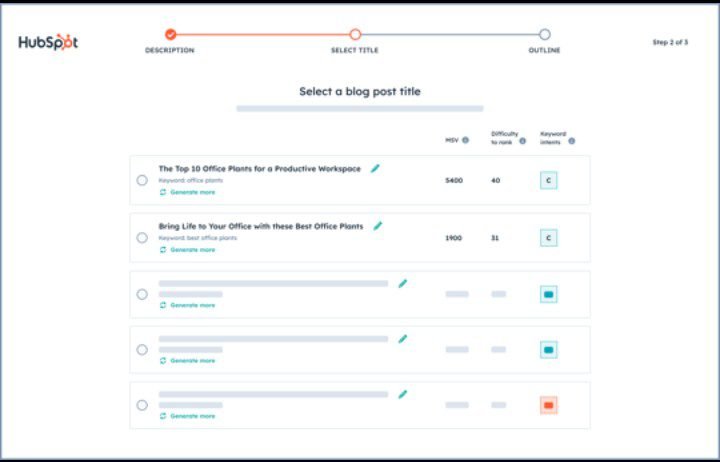
A New Era of Content Creation
In a world where everything moves quick online, making stuff to read ain’t only art – it’s planning. This tool from HubSpot shakes up how creators, promo folks, or companies build, fine-tune, keep track of words they put out. Built by big names in marketing who’ve earned trust over time, its AI brain mixes natural flair with clever tech that speeds things up while lifting quality.
What Makes HubSpot Content Writer Stand Out?
HubSpot Content Writer goes beyond simple drafting, unlike a lot of standard blog ai helpers. Instead of working solo, it links right into HubSpot’s entire platform – so your writing ties straight to search engine tweaks, data tracking, or posting features. Because of this setup, organizing, producing, then monitoring how your content does becomes quick without jumping between apps.
The tool really shines because it gets what you’re going for without extra clues. Toss it a quick idea, yet it builds out a complete article, message, or sales page that feels real. Output flows better, pulls readers in, so you skip endless typing and edits.
Ease of Use and Integration
HubSpot’s Content Writer lives in the CRM and Marketing Hub, letting you move from thought to publish without jumping around tabs. Its tidy layout helps everyone – new users included – jump in fast. Use quick taps to create drafts, headlines, opening lines, or updates for platforms like Twitter or Instagram. Instead of juggling apps, everything sticks close at hand.
It connects right into HubSpot’s keyword features, so everything you create hits SEO targets straight away. Instead of guessing, it recommends fitting terms, shapes your layout smartly, while keeping your voice steady no matter where it shows up.
Performance and Output Quality
The way things are written stands out most with HubSpot. It reads smooth, sounds real, because it gets the situation. Switch up how it talks – go formal, warm, or convincing – depending on who’s reading. Bloggers and writers save time fixing drafts, spend more getting stuff live.
Built into analytics, so you spot top-performing posts then tweak how you write based on what works. Thanks to live insights, HubSpot’s tool isn’t merely a helper – it actively pushes your content forward.
Why Businesses and Bloggers Love It
Marketers dig HubSpot’s writing tool since it mixes original ideas with speed. Plan your post schedule, create articles on the fly, or go live right away – while checking how readers react and whether clicks turn into sales.
With groups, shared editing lets people tweak and check work instantly. Swap versions through feedback loops, tag updates, speed up approvals – fewer reply-all chains slow things down.
Room for Improvement
HubSpot’s Content Writer works well, yet it shines brighter with a person fine-tuning the output. Occasionally, the text it creates needs tweaks to match how your brand naturally speaks. Because it lives inside HubSpot’s setup, folks already on that system get more out of it – if you’re not using their tools, this one might feel clunky next to separate AI apps.
A Smart Choice for Serious Content Creators
Honestly, HubSpot Content Writer isn’t merely some basic AI helper – it’s like having a solid teammate who guides creators and promo pros through crafting stuff that actually connects. Whether it’s nailing search rankings or keeping things relatable, this thing keeps the vibe real while boosting reach.
If you’re into blogging or pushing content online, this thing cuts down your workload, ramps up output, while streamlining how you write like never before. HubSpot shows yet again why they stick around at the front of blog ai digital marketing – its Content Writer just goes to show even automated smarts can sound real and natural.
Learn More
How to Use These Tools Together: A Workflow
To boost results with these tools, pair them up instead of going solo.
1. Idea plus plan: Try Frase or Anyword to shape your post while grabbing key terms.
2. Pull together a first version using Jasper or Copy.ai – either one works fine. Try this step before polishing later.
3. Edit words: Try Wordtune to tweak how it sounds and make it easier to read.
4. Edit it carefully – try Grammarly to clean up the final version.
5. Flip your blogs into emails or social updates – try HubSpot if that’s your tool. Instead of starting fresh, pull lines from articles you’ve already written. This way, one piece feeds many messages without extra effort.
6. One last look: keep your tone steady, use new examples, stick to up-to-date info, include visuals with clear descriptions.
Linking tools like this keeps your tone natural, saves effort on boring work, while boosting how well it reads and ranks.
Final Thoughts
Putting AI into your blog easy money online work swap out who you are – it just smooths things out. These helpers might speed up going from thought to finished post, yet still, only you give the tone, thoughts, real-life bits, plus connection your audience leans on. Go with what matches your way of writing, not what others push. Test one for around four weeks, get used to its odd habits, then judge whether it actually cuts down effort.
Conclusion
Blogging shouldn’t feel like a grind. Using smart tech, you could simplify how you work, fix up your layout, make things easier to read – yet stay true to your tone. We looked at seven solid options that take the hassle out of posting online, no matter if you’re flying alone, working with others, or managing a busy blog. Pick what fits how you move, apply it without going overboard, and always keep this in mind: focus on who’s reading. If the content’s worth it, people will jump in, react, or pass it around. Pick a tool now, test how it fits your process, yet tell us underneath which one worked best for you!
FAQ
Are Blog AI writing tools safe for getting approved by ad‑networks like AdSense?
Yeah – but only if what you write stays fresh, honest, and free from junk stuff. These AI helpers? They’re support tools, not instant fixes. When your post actually helps someone out, then it’s good to go.
Will using blog ai‑generated content hurt my SEO rankings?
Only when the material’s useful, one-of-a-kind, yet polished. Search engines like Google care more about quality experience than how it’s made. Rely on AI for support, though tweak it to include your take and substance.
Is it necessary to use every one of the seven tools mentioned?
Nope. Just go for whichever fits your style – maybe one or two. Love planning ahead? Then Frase could wait. Already sharp at polishing your own writing? Skip Wordtune or Grammarly. Stick with tools that actually help how you write.